
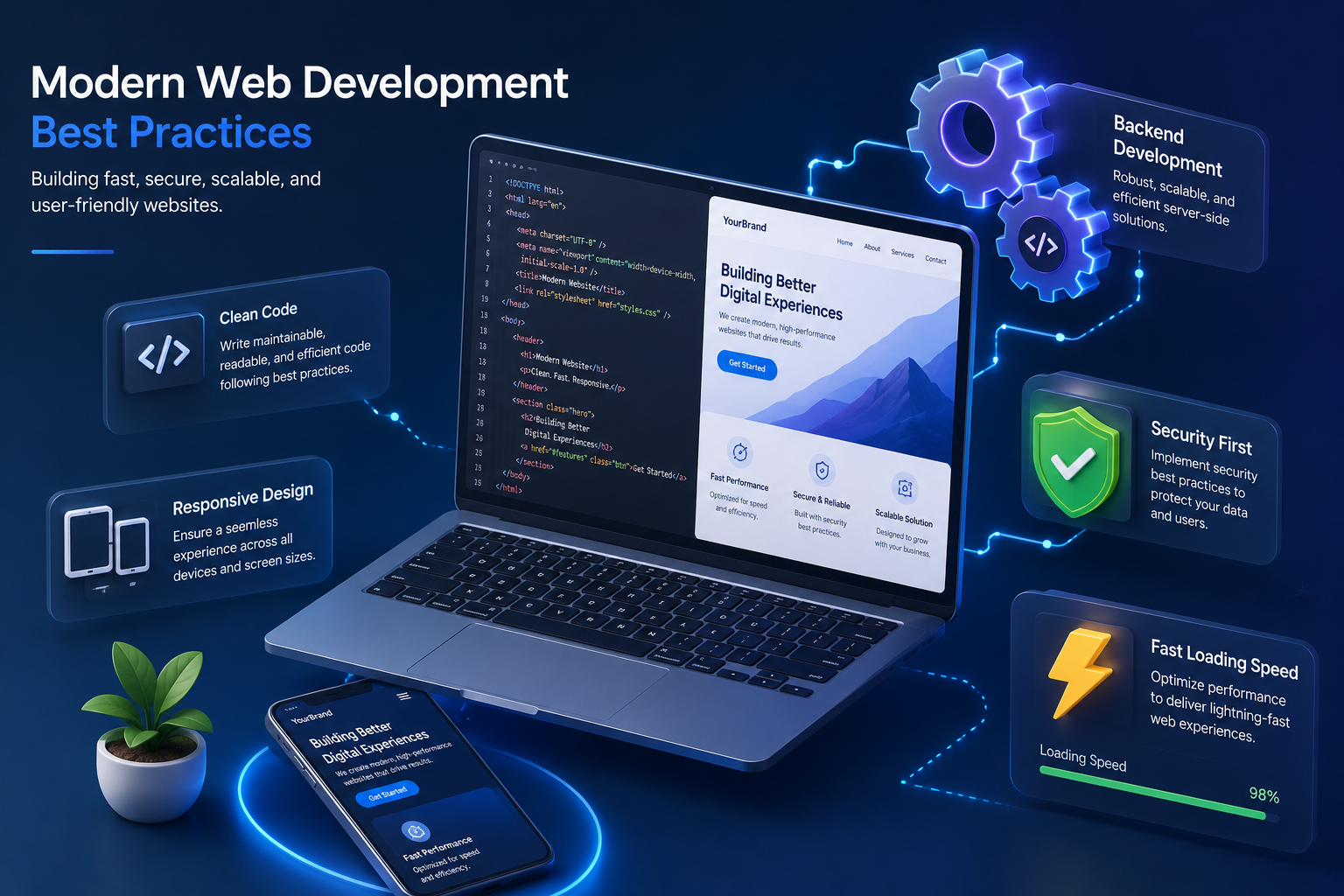
Are you building a new website or upgrading an existing one? If so, following modern web development best practices is absolutely essential. With technology evolving rapidly, a website built using outdated methods will suffer from slow speeds, security vulnerabilities, and poor search engine rankings. By implementing the right strategies from day one, you ensure your digital presence is scalable, secure, and ready for future growth.
Why Web Development Best Practices Matter in 2026
In today’s highly competitive digital landscape, your website is the foundation of your business. It is not just about making things look pretty; it is about how efficiently the site operates behind the scenes. Adhering to strict web development best practices guarantees a seamless user experience, which directly translates to higher conversion rates and better customer retention. Here are the top five proven strategies you need to implement today.
1. Prioritize Mobile-First Design
Over 70% of all global web traffic now comes from mobile devices. If your website is not designed specifically for mobile screens first, you are already losing customers. A mobile-first approach means starting the design process for small screens and progressively enhancing the layout for larger desktop monitors. This ensures perfect usability across all devices.
2. Optimize for Lightning-Fast Loading Speeds
Speed is a critical ranking factor for Google. If a page takes more than three seconds to load, the majority of visitors will simply abandon it. To achieve optimal performance, developers must compress images, minify CSS and JavaScript files, and utilize efficient caching mechanisms. Fast websites not only improve SEO but also drastically reduce bounce rates.
3. Write Clean, Maintainable Code
One of the most crucial web development best practices is writing clean, semantic code. Messy code might work temporarily, but it becomes a nightmare to update or debug in the future. By using proper indentation, commenting thoroughly, and following standardized coding conventions, you ensure that any developer can easily understand and scale your project later on. For modern documentation, developers often refer to the MDN Web Docs.
4. Implement Strong Security Measures
Cybersecurity threats are more advanced than ever. Protecting your user data should be your top priority. Always use HTTPS encryption (SSL certificates), sanitize user inputs to prevent SQL injection, and keep all plugins and server software updated to their latest versions. A secure website builds trust with your audience and protects your business reputation.
Common Technical Mistakes to Avoid
Many businesses try to cut corners during the development phase, leading to disastrous long-term consequences. Two of the biggest mistakes are ignoring web accessibility (making your site usable for people with disabilities) and neglecting backend architecture, such as proper database optimization or containerization techniques. Cutting corners might save a little money upfront, but it will cost you significantly more in lost revenue and emergency fixes down the line.
5. Focus on Technical SEO from Day One
Development and SEO must go hand-in-hand. Technical SEO involves creating a logical site architecture, generating XML sitemaps, and ensuring search engine bots can properly crawl and index your pages. If you ignore technical SEO during the build phase, even the best content won’t save your rankings.
Start Building Your Dream Website Today
Applying these core web development best practices transforms a mediocre website into a powerful, revenue-generating asset. Whether you are launching a simple corporate site or a complex e-commerce platform, quality development is the key to online success.
At PrimeStack Services, our expert team lives and breathes these standards. We build lightning-fast, highly secure, and fully optimized digital solutions tailored to your unique business goals.
👉 Get a Free Web Development Proposal Today!
Let us handle the technical heavy lifting so you can focus on growing your business.